

Regulation
EU proposes ban on fake scarcity claims, drip pricing and subscription traps
The Digital Fairness Act would rewrite the EU's rules on how businesses sell online, from discount claims and reviews to how customers cancel.

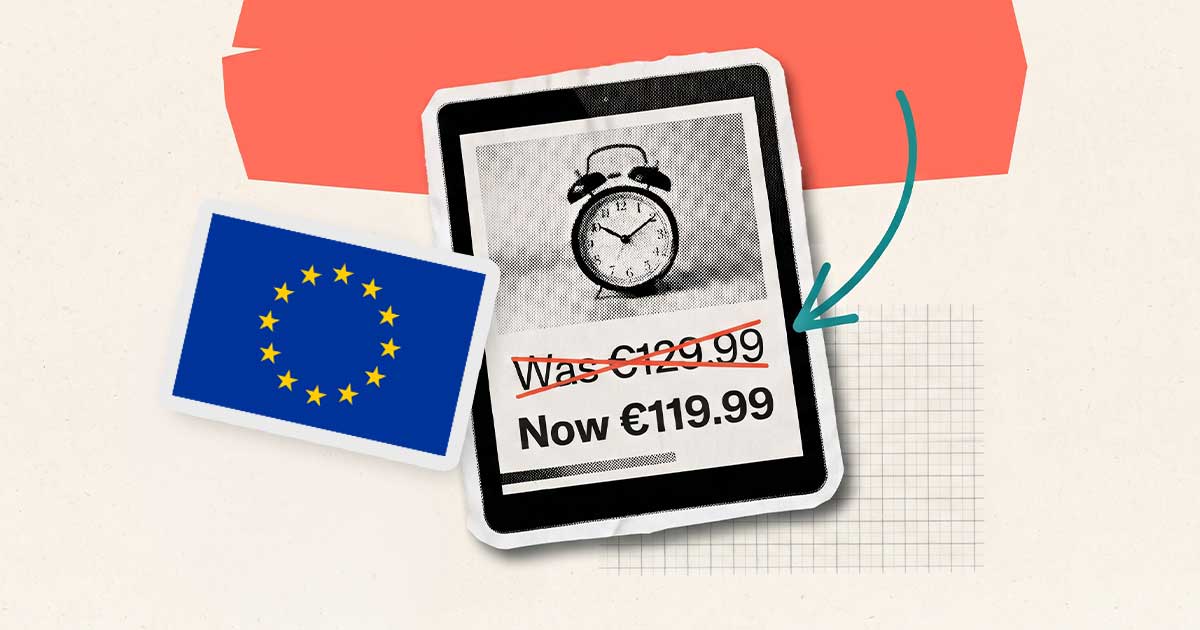
The European Commission has published its proposal for a Digital Fairness Act, a new regulation covering dark patterns, online pricing and subscriptions. It replaces the Unfair Commercial Practices Directive, which has been in place since 2005.
As a regulation, it would apply directly in every member state rather than being written into 27 different sets of national law.
The proposal was adopted on 11th November alongside a Simplification Directive and a revised Consumer Protection Cooperation (CPC) Regulation, which sets out how consumer law is enforced across the bloc.
The rules cover any business targeting EU consumers, including those based outside the EU, so UK sellers shipping into Europe would be in scope.
False claims about how much stock is left or how popular a product is would be banned outright. So would repeating scarcity messages throughout the checkout to pile on pressure.
Free · Tuesday & FridayStay ahead of UK ecommerce
Finding this useful? This is one of dozens of updates like it we track every week. Get the ones that matter to UK sellers in your inbox, twice a week – free.
The pricing rules will matter most to online sellers. Drip pricing is on the banned list, so the first price a shopper sees would have to include every unavoidable fee. Discount claims would also have to be measured against a verifiable price from a specific competitor, which rules out using an RRP as the “was” price.
Reviews get tighter too. Sellers displaying them would have to explain whether and how they check reviews come from real customers, and couldn’t present them as buyer reviews without taking reasonable steps to verify that.
For brands working with influencers, responsibility for labelling paid content would be shared between the creator and the business behind it. That includes gifted products, not just paid partnerships.
Subscription sellers would need a clearly labelled online cancellation button. Free trials couldn’t roll into paid plans unless the customer has been reminded and has actively agreed to pay.
The draft also gives shoppers the right to reach a human in customer service, limits profiling-based pricing aimed at minors and vulnerable consumers, and lets users switch off addictive features such as endless scrolling and autoplay.
For minors, paid loot boxes and pay-to-win mechanics would be restricted. Prices shown in virtual currencies would need a real-money equivalent alongside them.
National authorities would still handle most enforcement, and would need the power to fine at least 4% of a trader’s annual turnover. Under the revised CPC Regulation, the Commission could also take on large cross-border cases itself, with fines of up to 6% of worldwide annual turnover.
The Commission estimates the package could save EU consumers up to €13.7 billion a year. Its 2024 Digital Fairness Fitness Check found that harmful online practices were costing EU consumers at least €7.9 billion a year.
The proposal now goes to the European Parliament and the Council. As drafted, it would apply 12 months after it comes into force.
The UK has already brought in much of this. Drip pricing and fake reviews have been banned under the Digital Markets, Competition and Consumers Act since April 2025. The CMA has fined the AA £4.2 million and StubHub close to £900,000 for hiding mandatory fees.
The UK can also fine harder. The CMA can impose penalties of up to 10% of global turnover without going through the courts. The UK’s own subscription rules, covering renewal reminders and easier cancellation, apply to contracts taken out from 1st January 2027.
Mike Callachan
Mike Callachan is the founder of Beyond the Basket, a twice-weekly newsletter covering UK ecommerce. He has run online shops for more than a decade, most recently a personalised gift business selling across WooCommerce, Etsy and TikTok Shop. He writes about the platform changes, regulation and marketing shifts that land on small sellers first.
Related stories


Don’t leave empty-handed.
Join 500+ for other UK sellers staying ahead of the curve.
Stay ahead - Subscribe for the, 5-minute twice weekly read, that could help give your store the edge.
By subscribing, you agree to our terms of service