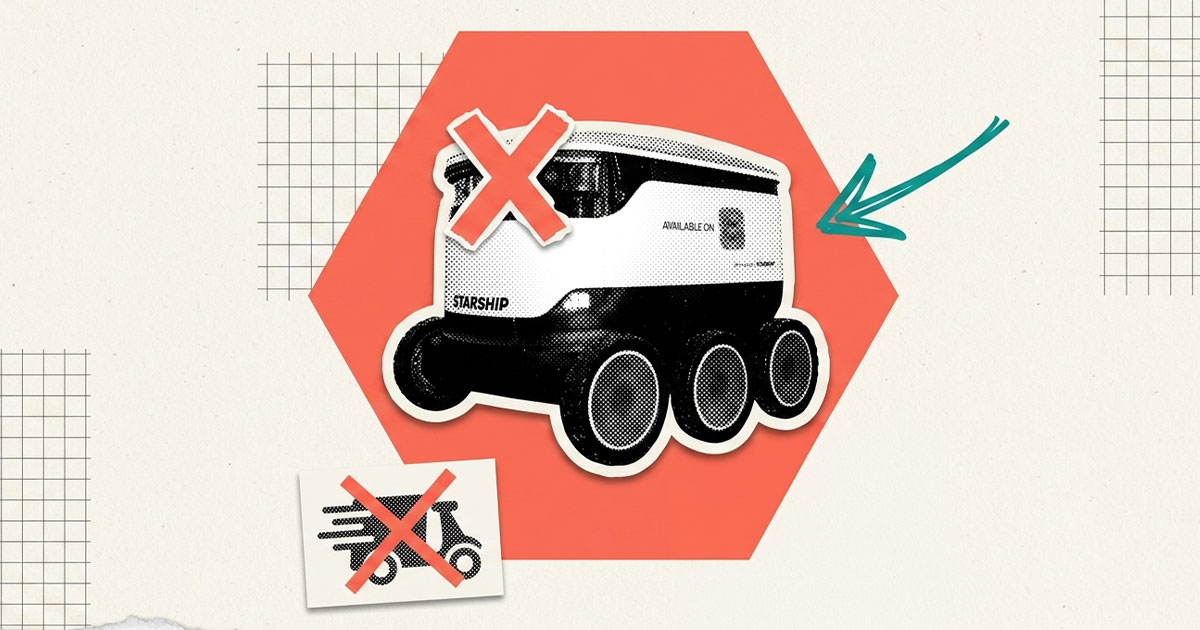
Starship Technologies launched its six-wheeled delivery robots in Sheffield in March 2026, running food orders for Uber Eats and groceries for the Co-op across roughly 50,000 households, with each robot capable of covering up to two miles in under half an hour. As of 24th August, the pilot is over. Starship’s public affairs manager, Ryan Case, put it simply: “Our pilot in Sheffield has now come to an end, and we have paused the service while we review what we’ve learned.”
What Case didn’t want attributed to the decision was five months of visible public hostility toward the robots. Units were sprayed with black graffiti reading “off our streets,” had their visibility flags snapped off, and were blocked mid-route by traffic cones placed deliberately in their path. Case called the incidents “disappointing” but was firm that “vandalism was not a factor in our decision to pause the service: this was a commercial decision and a natural conclusion to the pilot phase.“
The accessibility charity Living Streets used the moment to repeat a point it’s been making since robots first turned up on UK pavements: that shared space between robots and pedestrians, particularly elderly and disabled people, is running ahead of any clear regulation. There’s no dedicated UK framework governing pavement robots the way there is for e-scooters, for instance. They’ve largely operated under local authority pilot agreements.
Starship reported no faults with the robots themselves over the five months: 50,000 households served, sub-30-minute delivery windows, no reliability problems reported anywhere. The graffiti, the snapped flags, the traffic cones, those came from residents, not the technology.
Starship has said it may bring the service back to Sheffield once its review is finished, though no date has been given. If the robots do return, it will be the first test of whether five months of public pushback changes how the rollout is handled next time.